

RESEARCH
Glyco-Systems biology Division
Purpose / Contents
Deciphering glycan code from glycan big data
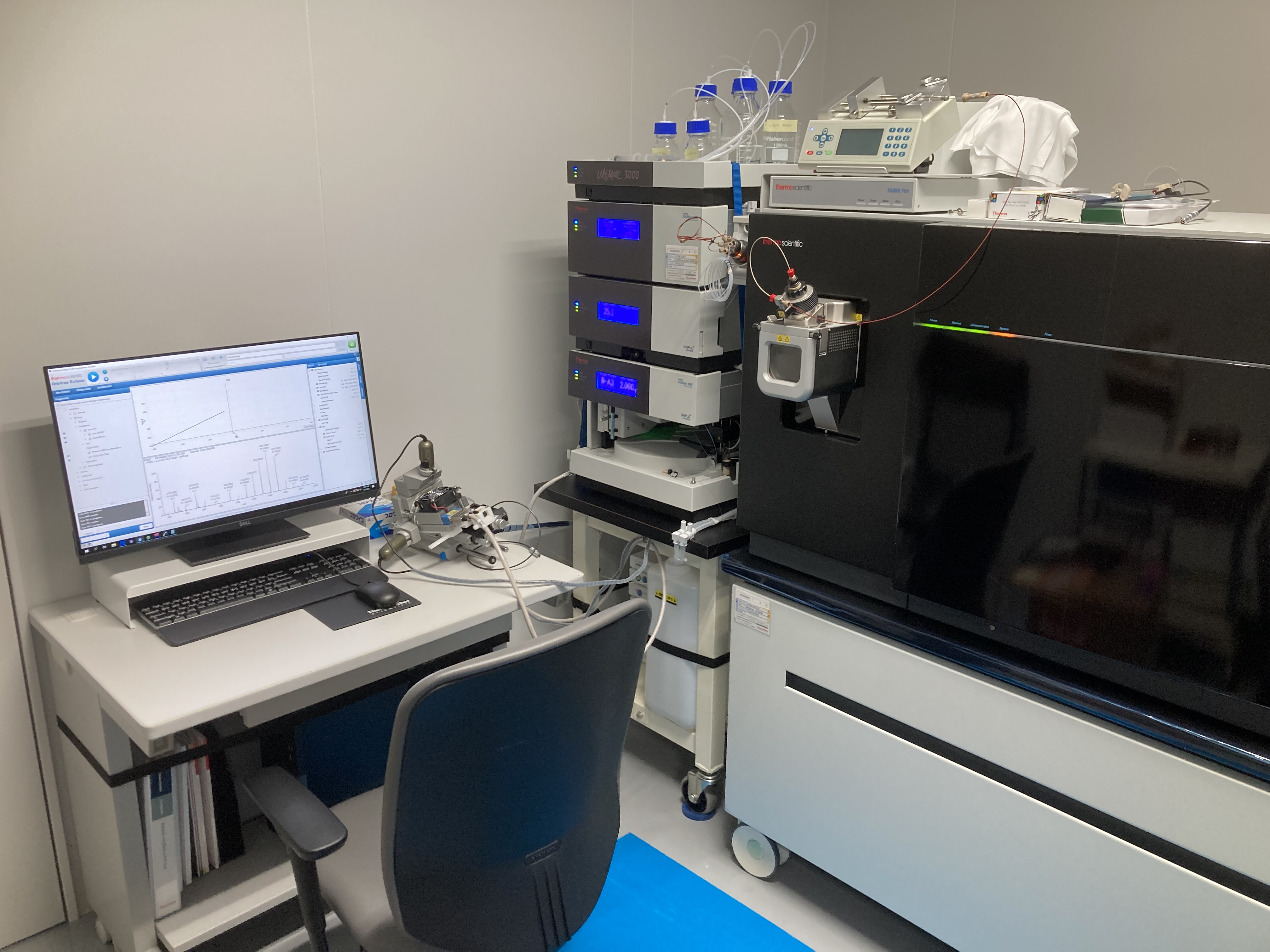
The purpose of the Systems Biology Division in the Integrated Glyco-Big Data Center (iGDATA) is to understand glycan functions and complexity by analyzing glycan-related big data using systems biology approaches. This will lead to the prediction of key biomarkers and drug targets. By collaborating with other divisions focusing on studies using model organisms and human samples, we will predict glycan structures associated with various diseases. To achieve this, we will develop algorithms, tools, and software targeting mass-spec-based glycomics and glycoproteomics data. In addition, we aim to develop a new interface that links genome science and glycoscience, which is an innovative platform for developing new strategies against various diseases.
Examples
Comprehensive understanding of changes in cellular glycans using mass-spectrometry
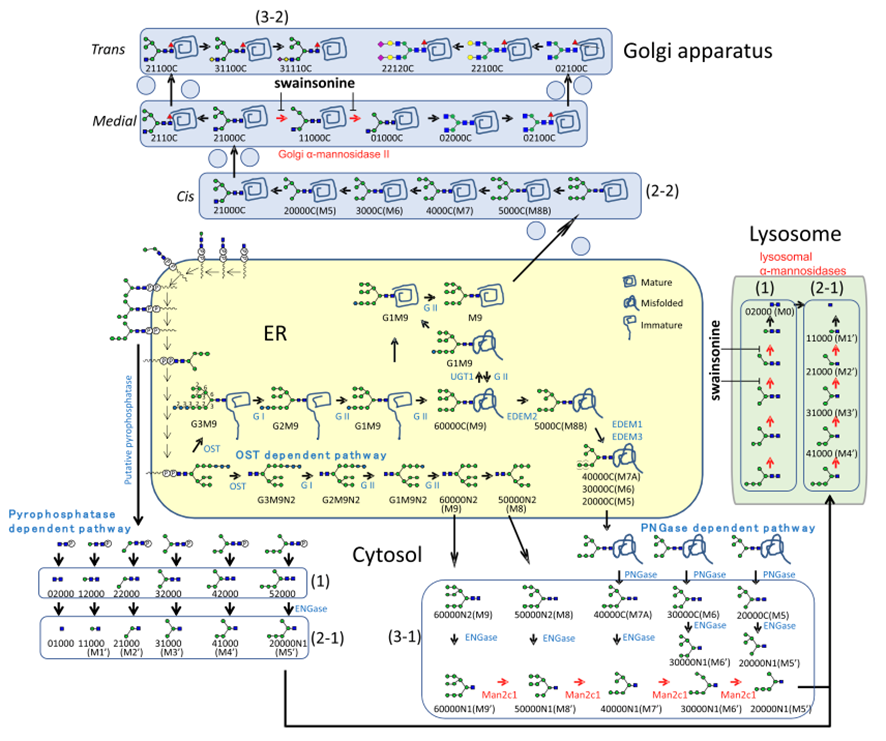
We have developed a new comprehensive method for the glycomic analysis of total cellular glycans using mass-spec, which enables us to detect glycan changes in various samples. Recently, we elucidated the changes in glycan structure in cells caused by the plant compound "swainsonine“, This compound is known to evoke toxic symptoms in domestic animals.
(Morikawa et al., BBA - General Subjects, 2022, 1866, 130168)
Members List
Yusuke Matsui
Division headSystems Biology Division
- Research interests
- Statistical science, informatics, computational biology, computational neuroscience, bioinformatics
- Research subject
- Life science is generating huge and complex data at an unprecedented rate. Various and heterogeneous big data are being accumulated, including next-generation sequencing technology, mass spectrometry to capture proteome and post-translational modifications, and sensing technology to capture imaging and biological information. It is quite important to utilize such large-scale big data in life science in order to reveal the mechanisms of unknown biological systems. Our mission is to develop useful mathematical modeling and data analysis methods in life science.
Naoki Honda
Systems Biology Division
- Research interests
- Data-Driven Biology, Machine Learning, Mathematical Modeling
- Research subject
- By making full use of machine learning, we are developing mathematical modeling research rooted in data. We are also conducting single-cell omics analysis and pathological analysis.
Ryuji Kato
Systems Biology Division
- Research interests
- Image analysis, cell morphology, cell adhesion, cell quality control
- Research subject
- We aim to develop cell image analysis technique for cell quality control and develop culture scaffold materials for controlling cell quality. For this purpose, we label glycolipids in cell membranes and search for glycan binding peptides in cell membranes.
Bingyuan Zhang
Systems Biology Division
- Research interests
- Statistical Science, Machine Learning, Bioinformatics
- Research subject
- Massive amounts of data from innovative technologies such as sequencing, mass spectrometry techniques present new challenges and exciting opportunities. My mission is to develop useful mathematical tools based on state-of-the-art statistical and machine learning techniques to utilize these large-scale heterogeneous real-world data to discover new mechanisms in unknown biological systems and ultimately contribute to scientific discovery.
Akihiro Fujita
Systems Biology Division
Research Division
Contact us by phone
Gifu University

058-293-3754
( +81-58-293-3754 )
Weekday, 9:00-17:00
Nagoya University
052-789-5365
( +81-52-789-5365 )
Weekday, 9:00-17:00
Contact us

 DOWNLOAD